BLACKVUE
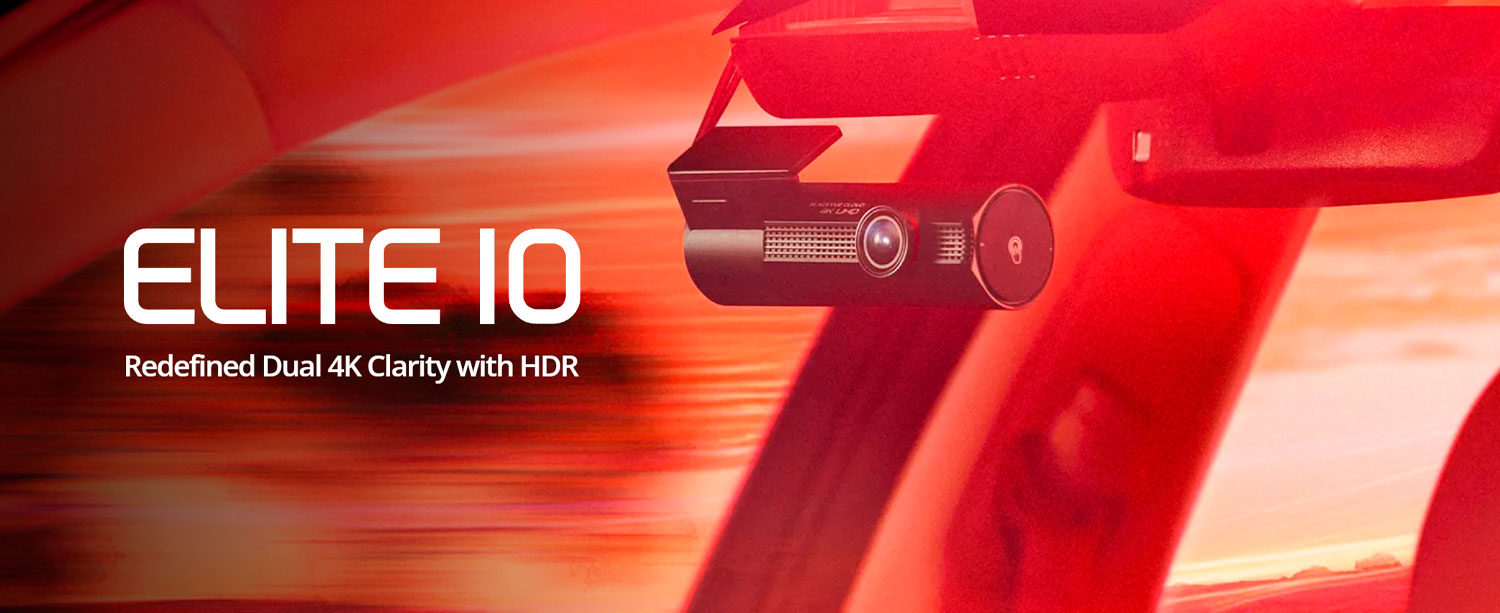
ELITE 10
DASHCAM
4K Front · 2K Rear · STARVIS 2 · BlackVue Cloud
The BlackVue Elite 10 is the pinnacle of dashcam technology — 4K Ultra HD front recording, 4K rear, Sony STARVIS 2 night vision, and always-on BlackVue Cloud connectivity. Professionally hardwired and hidden by our certified technicians.
Model
BlackVue Elite 10
Front Res.
4K UHD
Rear Res.
4K UHD
Night Vision
STARVIS 2
Wi-Fi
2.4 / 5 GHz
GPS
Built-in
Parking Mode
Yes
Cloud
BlackVue Cloud
SEE IT IN ACTION
Watch the BlackVue Elite 10 perform in real-world conditions.
KEY FEATURES
What sets the BlackVue Elite 10 apart from every other dashcam on the market.
4K UHD Front + 4K Rear
The Elite 10 captures 4K Ultra HD footage both up front and in the rear — every plate, every detail, every time.
STARVIS 2 Night Vision
Sony's latest STARVIS 2 image sensor delivers exceptional low-light performance — sharp, color-accurate footage even in near-total darkness.
Impact & Motion Detection
Advanced G-sensor and motion detection automatically save and lock footage the moment an incident is detected, protecting critical evidence.
Dual-Band Wi-Fi & BlackVue Cloud
Connect via 2.4 GHz or 5 GHz Wi-Fi and access live view, footage download, and GPS tracking from anywhere through the BlackVue Cloud app.
Parking Mode
Continuous, motion-triggered, or impact-triggered parking recording keeps your vehicle protected 24/7 — even when the engine is off.
Built-in GPS Logging
Every recording is stamped with speed and location data, giving you a complete picture of every drive for insurance and legal documentation.
WHY EVERY DRIVER NEEDS ONE
Accident Protection
Irrefutable 4K video evidence protects you in insurance disputes and proves fault in collisions.
24/7 Parking Guard
Parking mode records any motion or impact around your vehicle even when the engine is off.
Remote Access
Check live footage and receive instant alerts from anywhere in the world via BlackVue Cloud.
PROFESSIONAL INSTALLATION
Every BlackVue Elite 10 is installed by our certified technicians in Moorpark, CA — completely hidden, hardwired, and cloud-ready.
Camera Placement
Front and rear cameras are precisely positioned for maximum field of view with zero obstruction to your sightlines.
Hardwired Power
Wired directly to your vehicle's fuse box for clean, always-on power — no dangling cables or cigarette lighter adapters.
Cable Routing
All cables are routed through headliner and door trim for a completely hidden, factory-quality appearance.
App & Cloud Setup
Wi-Fi pairing, BlackVue Cloud activation, GPS calibration, and recording settings are fully configured before you leave the shop.
READY TO INSTALL YOUR BLACKVUE ELITE 10?
Contact us today to schedule your installation, Serving Ventura County and all of Southern California.
Contact Us TodayThe moment something goes wrong on the road, details get fuzzy fast. A dash cam gives you something better than memory — a clear record of what actually happened. For daily drivers, parents, rideshare operators, and fleet owners, that can make a stressful situation a lot easier to sort out.
That is why more vehicle owners are treating a dash cam as a practical upgrade, not a gadget. It can help after an accident, discourage bad behavior around your vehicle, and add peace of mind when someone else is driving your car. The key is choosing the right setup and having it installed in a way that works reliably every day.
Why a dash cam matters
Most people start looking at dash cams after a close call, a hit-and-run story, or a parking lot incident. The value becomes obvious when there is a dispute about who was at fault or when your vehicle is damaged and nobody leaves a note. Video footage cannot prevent every problem, but it can remove a lot of guesswork.
A dash cam is also useful in smaller situations that do not always make the news. Maybe another driver cuts across lanes and causes a sudden stop. Maybe a teen driver in the family is still building confidence behind the wheel. Maybe a work truck is parked at different job sites all week. In each case, recorded footage adds a level of accountability that many drivers appreciate.
For Southern California drivers, this matters even more. Heavy traffic, crowded parking lots, freeway commuting, and stop-and-go driving create more opportunities for incidents. A dash cam will not change the roads, but it can give you a better way to document what happens on them.
What a good dash cam should actually do
Not every dash cam is worth installing. Some look fine on a product page but fall short where it counts, especially in real driving conditions. The goal is not to chase the longest feature list. It is to get dependable footage when you need it.
Video quality is the first thing most people notice, and for good reason. If footage is too grainy to read a plate or identify a vehicle clearly, the camera has limited value. Resolution matters, but so does low-light performance. Many incidents happen early in the morning, at dusk, or in parking areas with mixed lighting, so a camera that handles those conditions well is usually a better investment than one that only looks sharp in ideal daylight.
A wide viewing angle helps capture more of the road, but wider is not always better. Extremely wide lenses can distort the edges and make details harder to identify. For most drivers, the sweet spot is broad enough to cover multiple lanes without stretching the image too much.
Loop recording is another feature that should be standard. It allows the camera to keep recording by overwriting older footage once the memory card is full. Without it, the system can stop recording at the worst possible time. G-sensor event detection is also useful because it helps mark footage when there is an impact or sudden movement, making that video easier to find later.
Front-only or front-and-rear dash cam?
This is one of the most common decisions, and the right answer depends on how the vehicle is used. A front-facing camera is better than no camera at all, and for some drivers it covers the most likely incidents. If budget is tight, a quality front camera can still provide meaningful protection.
That said, a front-and-rear dash cam setup gives fuller coverage and is often the better long-term choice. Rear-end accidents are common, and a rear camera can also capture tailgating, unsafe lane changes, or activity behind the vehicle while parked. If you drive frequently, park in public lots, or simply want a more complete record, front-and-rear coverage makes sense.
For larger vehicles, family SUVs, work vans, and trucks, rear coverage can be especially helpful. Those vehicles often deal with more blind spots, more parking exposure, and more shared use between drivers. In those cases, the extra camera is usually worth it.
Parking mode changes the value of a dash cam
A lot of people think of dash cams only as driving cameras, but parking protection is a major part of the appeal. If someone backs into your parked vehicle, brushes a bumper, or tampers with the car, parking mode can capture activity when the engine is off.
This feature does require some planning. A dash cam with parking mode usually needs a proper hardwire installation or a dedicated power solution so it can monitor the vehicle without draining the battery unnecessarily. That is where installation quality matters. If the system is not set up correctly, you can end up with unreliable recording, battery issues, or exposed wiring that looks out of place.
A clean install also matters for visibility and safety. Cameras should be mounted in a location that gives a strong view of the road without getting in the driver's line of sight. Wires should be concealed, connections should be secure, and the setup should feel like it belongs in the vehicle, not like an afterthought.
The installation side matters more than people think
A dash cam is only useful if it works every time you need it. That sounds obvious, but many problems come from rushed or improvised installation. Loose power connections, poorly routed wiring, bad camera placement, and inconsistent recording are all common issues with DIY setups.
Professional installation solves a lot of that. It helps ensure the camera is mounted correctly, the wiring is hidden, and any hardwire or parking mode setup is configured properly for the specific vehicle. That matters even more in newer vehicles, where electronics are more complex and owners want upgrades that feel factory-clean.
There is also the benefit of getting the right recommendation in the first place. Some drivers need simple front coverage. Others need front and rear recording, parking mode, or a setup that supports business use. A knowledgeable installer can help match the system to the vehicle and the way it is actually driven, which prevents overspending on features that will never be used or underspending on a setup that leaves major gaps. For drivers who value convenience, mobile service adds another layer of practicality. Having a qualified installer come to your home or workplace can make the upgrade easier to fit into a busy schedule. That is part of why many customers prefer working with a specialist like Autotech Dealer Services rather than trying to piece the job together on their own.
Who benefits most from a dash cam?
The short answer is almost anyone who drives regularly, but some groups tend to see the value faster. Commuters benefit because more road time means more exposure to accidents and aggressive driving. Parents often like having footage when a younger driver is using the family vehicle. Business owners and fleet managers appreciate the record of how vehicles are being driven and what happens on the road or at job sites.
Rideshare and delivery drivers have even more reason to consider one because their vehicles are working every day in unpredictable conditions. A dash cam can add a layer of protection during passenger interactions, busy pickups, and high-mileage driving. Even for drivers who rarely have problems, there is comfort in knowing the vehicle has an extra set of eyes on the road.
What to think about before you buy
Start with your actual needs, not the most expensive model available. If your main concern is accident documentation during your commute, a strong front camera may be enough. If you want better protection while parked or fuller coverage around the vehicle, consider front and rear cameras with parking mode.
Think about where and how you drive. Night driving, long commutes, street parking, teen drivers, business use, and public job sites all change what makes sense. Storage capacity, heat tolerance, and long-term reliability also matter, especially in sunny California conditions where cabin temperatures can climb quickly.
It is also smart to think ahead. If you know you want a clean, dependable setup, installation should be part of the decision from the beginning, not an afterthought. The right dash cam is not just the camera itself. It is the complete system, including placement, power, wiring, and daily usability.
A good dash cam earns its keep quietly. You hope you never need the footage, but when you do, you want it to be there, clear and ready, without excuses. That kind of confidence comes from choosing the right equipment and making sure it is installed to work the way it should from day one.