BLIND SPOT
MONITORING
SYSTEMS
iDatalink ADVBSD30
30m Radar Detection · Mirror LED Alerts · Lane Change Warning
The iDatalink ADVBSD30 adds factory-style blind spot monitoring to virtually any vehicle. Radar sensors hidden behind your rear bumper detect vehicles up to 30 meters away, while discreet mirror-mounted LEDs alert you before you change lanes — all professionally installed with zero visible hardware.
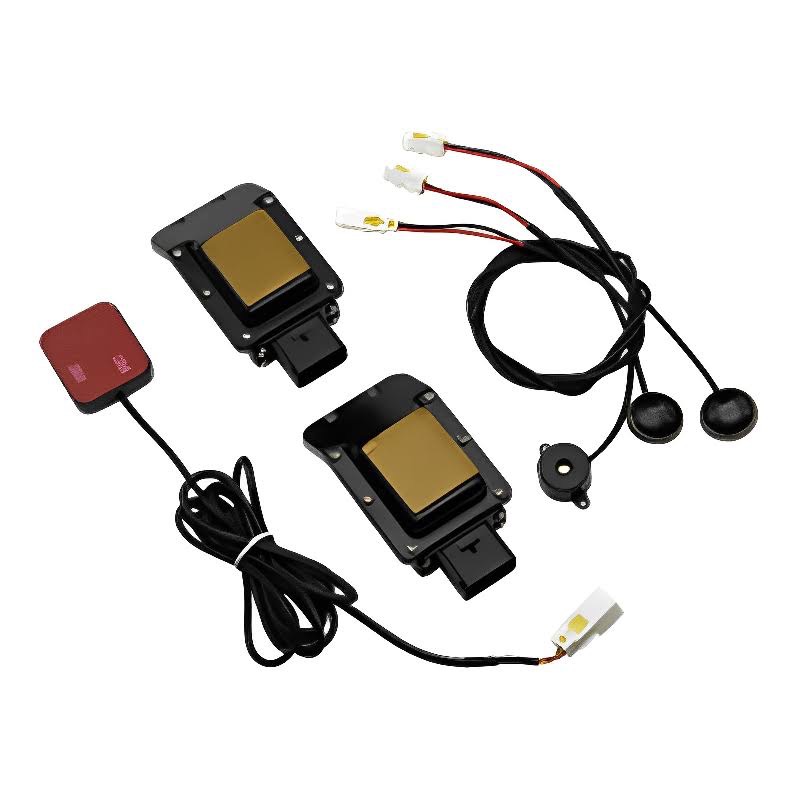
Product
iDatalink ADVBSD30
Detection
Radar-Based
Coverage
30m Rear Blind Zone
Alert
Visual + Audio
Integration
OEM-Style
Install
Professional
ADVBSD30 FEATURES
Everything the iDatalink ADVBSD30 brings to your vehicle.
Radar-Based Detection
The ADVBSD30 uses microwave radar sensors to continuously monitor your rear blind zones — detecting vehicles up to 30 meters back, even at highway speeds.
Mirror-Mounted LED Alerts
Discreet LED indicators mount in or near your side mirrors. A solid light warns of a vehicle in your blind spot; it flashes urgently if you signal to change lanes.
Lane Change Warning
When a vehicle is detected in your blind zone and you activate your turn signal, the system escalates to a flashing alert — giving you a clear heads-up before you move.
Automatic Activation
The system activates automatically above a set speed threshold and deactivates at low speeds — no buttons to press, no settings to manage while driving.
Clean OEM Integration
All sensors are hidden behind the rear bumper fascia. Wiring is routed through the vehicle's interior panels for a completely factory appearance.
All Makes & Models
Compatible with virtually any vehicle. Our technicians select the correct mounting hardware for your specific make, model, and year.
HOW IT WORKS
The ADVBSD30 uses two radar modules mounted behind the rear bumper. Each module covers one rear quarter — the zones your mirrors can't fully see. When a vehicle enters the detection zone, the corresponding mirror LED illuminates. If you then activate your turn signal, the LED flashes rapidly and an audible alert sounds.
RADAR MODULES
Two microwave radar sensors mount invisibly behind the rear bumper fascia. They continuously scan both rear blind zones and feed real-time data to the control module.
- 30-meter detection range
- Works at highway speeds
- Hidden behind bumper fascia
- No drilling through painted surfaces
- Detects cars, trucks, and motorcycles
MIRROR LED ALERTS
Discreet LED indicators mount in or near your side mirrors. They provide a two-stage warning — solid when a vehicle is present, flashing when you signal to change lanes.
- Solid LED — vehicle in blind zone
- Flashing LED — lane change warning
- Wired to turn signal circuit
- Audible alert on lane change warning
- Adjustable brightness
- OEM-style appearance
PROFESSIONAL INSTALLATION
Every ADVBSD30 install is performed by our certified technicians at our Moorpark, CA shop.
01
Vehicle Assessment
We inspect your rear bumper and mirror configuration to determine optimal sensor and indicator placement for your specific vehicle.
02
Sensor Mounting
ADVBSD30 radar sensors are mounted behind the rear bumper fascia — completely hidden, with no visible hardware or drilling through painted surfaces.
03
LED Indicator Install
Mirror LED indicators are installed and wired to your turn signal circuit so the system knows when you're changing lanes.
04
Calibration & Test
We calibrate detection sensitivity, verify all zones are active, and test the full warning sequence before handing the vehicle back.
READY TO ADD BLIND SPOT PROTECTION?
Contact us to schedule your iDatalink ADVBSD30 installation at our Moorpark, CA location. We serve all of Ventura County and Southern California.
A quick shoulder check is still part of safe driving, but it does not always catch everything. On packed Southern California freeways, motorcycles split lanes, cars move fast, and traffic patterns change in seconds. That is where blind spot assist can make a real difference. It adds another layer of awareness when a vehicle is sitting just outside your normal line of sight.
For many drivers, this feature used to be available only on newer trim packages or luxury models. That is no longer the case. Aftermarket blind spot systems now give drivers a practical way to add modern safety technology to a vehicle they already like and plan to keep.
What blind spot assist actually does
Blind spot assist is designed to alert you when another vehicle is traveling in the lane beside you but is hard to see in your side mirror. Most systems use sensors mounted in the rear sides of the vehicle to monitor adjacent lanes. When a car enters that monitored area, the system gives a warning, usually with a light near the side mirror or inside the cabin.
Some systems go a step further and add an audible alert if you turn on your signal while a vehicle is still in your blind spot. That extra warning matters because it shows up at the exact moment you are about to change lanes.
The goal is not to drive for you. It is to reduce the chance of a missed vehicle during a lane change. Good systems are simple, timely, and easy to understand while you are driving.
Why drivers add blind spot assist
Most people do not start shopping for blind spot assist because they want a flashy upgrade. They want it because they have had a close call, they commute in heavy traffic, or they are sharing a vehicle with a newer or older driver.
On a daily commute, lane changes can become repetitive. Repetition is where people get comfortable, and comfort can lead to mistakes. A warning system helps bring your attention back to a risk you might otherwise miss. That is especially helpful in SUVs, trucks, cargo vans, and other vehicles with larger blind zones.
Parents often ask about this upgrade for family vehicles because it adds reassurance when teens or college-age drivers are behind the wheel. Business owners may want it for work vans and fleet vehicles because reducing avoidable side-swipe incidents is good for both safety and cost control. Even experienced drivers like the added confidence, especially if they are keeping an older vehicle instead of replacing it with a newer one.
Who benefits most from blind spot assist
This feature is useful for almost any driver, but some vehicles and driving habits make it more valuable.
If you drive a full-size truck, large SUV, work van, or vehicle with limited rear-side visibility, blind spot assist can be a strong upgrade. These vehicles naturally create bigger areas that are harder to monitor with mirrors alone. If you spend a lot of time on the 101, the 405, or crowded local corridors where traffic merges constantly, the system has more opportunities to help.
It is also a smart option if your vehicle already has a backup camera or parking sensors and you want to build a more complete safety package. Drivers who have grown used to newer-car convenience features often find that blind spot alerts become one of the features they miss most when driving an older vehicle.
Factory system vs. aftermarket blind spot assist
The biggest question many customers have is whether an aftermarket system is actually worth it compared with factory-installed technology. The honest answer is that it depends on the vehicle, the quality of the hardware, and the quality of the installation.
A factory system is built into the vehicle from day one, often tied into other driver-assistance features. That can mean tighter integration and more settings through the original dash display. If you are buying a new vehicle anyway, it makes sense to compare trim levels and see whether the package is worth the cost.
But if you already own a vehicle you like, replacing it just to get blind spot monitoring usually does not make financial sense. A professionally installed aftermarket blind spot assist system can deliver the core benefit you actually care about — a reliable warning when a vehicle is next to you. For many drivers, that practical result matters more than whether the feature came from the factory.
The key difference is that aftermarket quality varies. A low-cost universal kit and a properly selected, professionally installed system are not the same thing. Placement, calibration, and clean installation matter.
What to expect from a professional installation
A good installation starts with the vehicle, not the box. Different body styles, bumper shapes, and driving needs can affect which system makes the most sense. That is why professional recommendation matters.
In most cases, the installer will evaluate sensor placement, determine the best alert location, and make sure the system works in a way that feels natural to the driver. You want alerts that are noticeable but not distracting. You also want the system to look clean and function reliably over time.
This is one of those upgrades where workmanship affects everyday usability. Poor sensor placement can lead to missed detections or false alerts. Sloppy wiring can create long-term issues that are far more frustrating than the original blind spot problem. A professional install is about more than getting the unit to power on. It is about making sure it performs properly in real traffic.
Limits and trade-offs to keep in mind
Blind spot assist is helpful, but it is not magic. It should support your driving habits, not replace them. You still need to use your mirrors, check your surroundings, and drive defensively.
Like any technology, performance can vary based on the system design and the vehicle it is installed on. Some systems are more basic and only provide visual alerts. Others add sound warnings and broader detection coverage. More features can be useful, but only if they are tuned well and fit the way you drive.
There is also the question of expectations. Some drivers assume blind spot assist will catch every object in every condition with factory-level behavior across all vehicles. That is not always realistic. Motorcycles, unusual traffic angles, weather, and vehicle design can all influence how a system behaves. A good installer should set clear expectations and recommend a setup that matches the vehicle instead of overselling what the technology can do.
Is blind spot assist worth adding to an older vehicle?
In many cases, yes. If your current vehicle is paid off, runs well, and still fits your needs, adding modern safety technology can be a better value than upgrading to a newer car payment just to get a few convenience features.
This is especially true when blind spot assist is part of a broader plan to improve how the vehicle works for you. Maybe you are also adding a backup camera, parking sensors, or Apple CarPlay. Together, those upgrades can make an older vehicle feel more current, more useful, and easier to live with every day. For drivers in Ventura County and across Southern California, working with a local specialist like Autotech Dealer Services means you can get guidance based on your actual vehicle and have the system installed properly without guessing your way through an online kit.
How to decide if it is the right upgrade
The best way to think about blind spot assist is simple: where do you feel the most strain while driving? If lane changes in traffic make you second-guess yourself, if your vehicle has poor side visibility, or if multiple family members use the car, this upgrade has a clear practical benefit.
It may be less urgent if you drive short local routes, rarely use freeways, or already have excellent visibility in a smaller vehicle. Even then, some drivers still want the added confidence. There is no one-size-fits-all answer. The right choice depends on how you drive, what you drive, and how long you plan to keep it.
A useful safety upgrade should solve a real problem, not just add another feature to the dashboard. Blind spot assist makes the most sense when it reduces stress, supports better decisions, and helps you feel more confident in traffic without changing the vehicle you already depend on.
If you have ever had that moment where a car seemed to appear out of nowhere beside you, you already understand the value. Sometimes the best upgrade is the one that helps you avoid the problem you never want to have.